Journal / Outdoor Living
Outdoor Living in North Atlanta: Planning the Rooms Beyond the Walls
A practical guide to terraces, porches, pools and gardens that suit Georgia's clay, heat, storms and mature trees, and feel like part of the house.
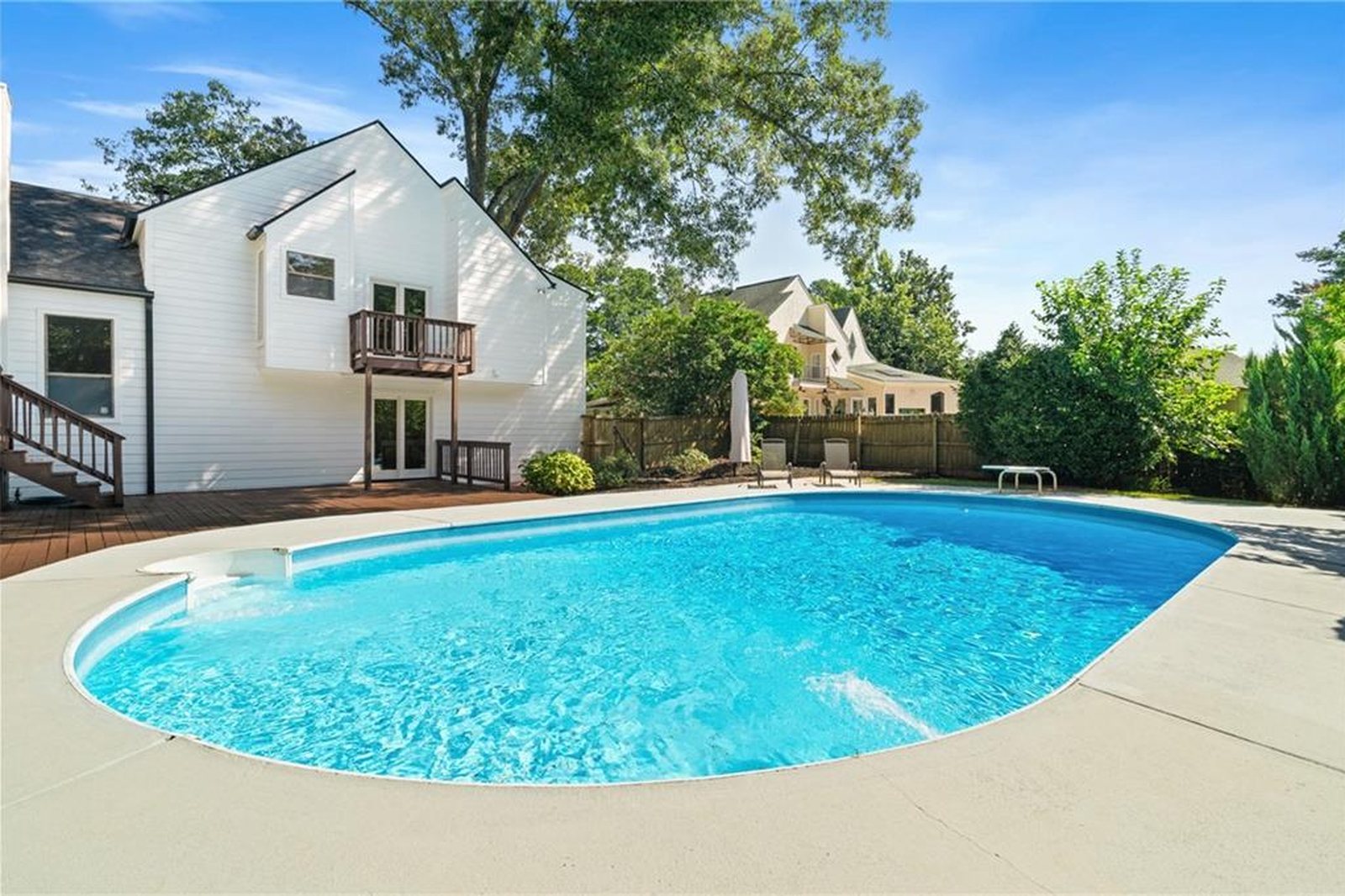
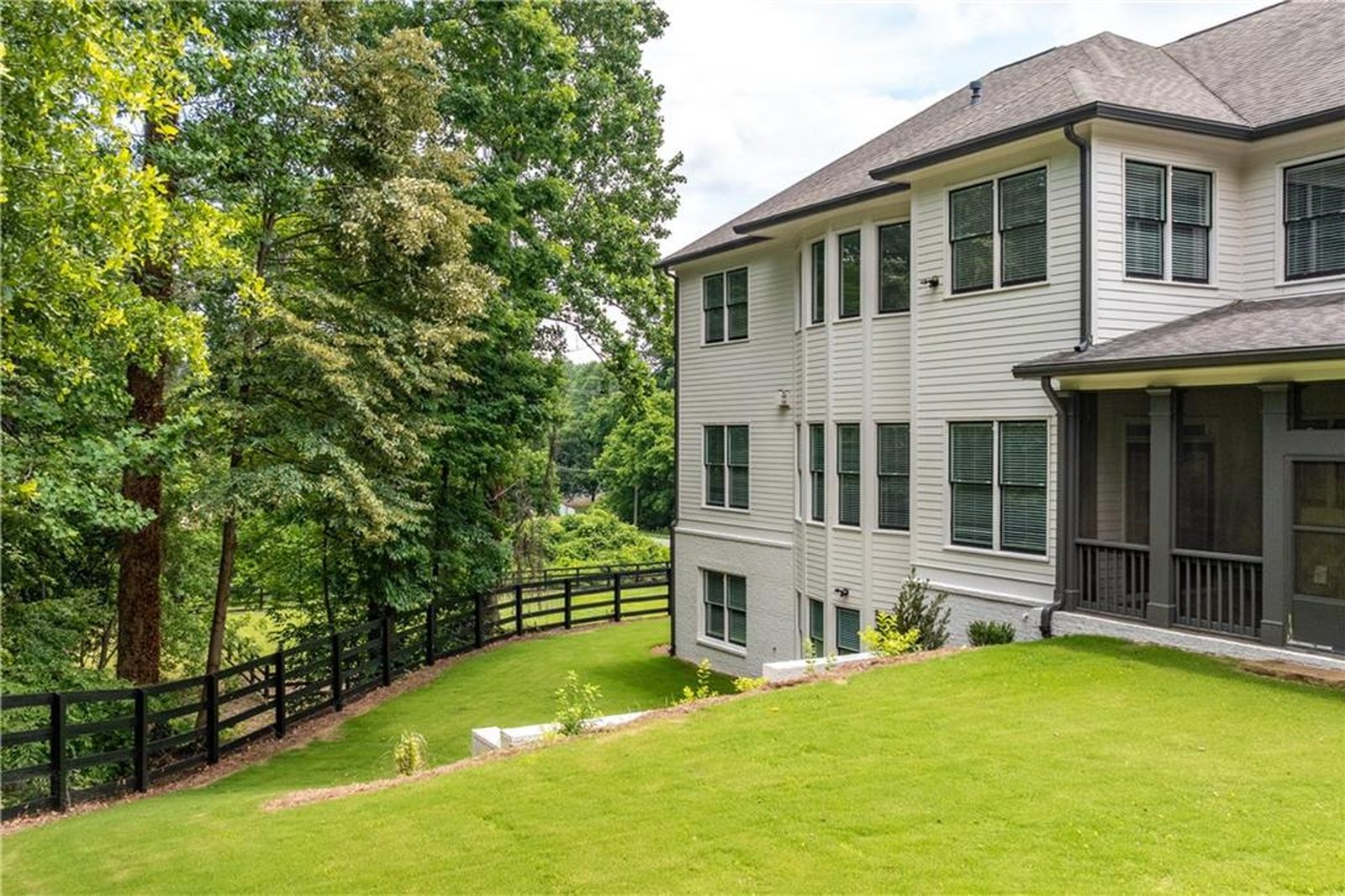
Most North Atlanta lots come with two things a designer cannot buy: mature trees and some slope. They make a yard feel settled and private. They also decide where water goes, where the sun lands and what you can build without harming the trees.
The best outdoor spaces here start from those facts rather than from a catalog.
Start with rooms, not features
A list of features tends to produce a yard where a pool, a fire pit and a kitchen each float on their own patch of lawn. A better approach is to plan outdoor rooms, each with a purpose, a size and a relationship to the house, as you would a floor plan.
- Arrival and front entry. The drive, walk and front porch. This is where the house introduces itself.
- Dining. A table near the kitchen door, ideally under cover. Short, level trips with a tray matter more than a view.
- Lounging. Deep seating placed for evening shade and a good sightline into the garden.
- Cooking. Close to dining, but downwind of it.
- Pool and spa. Usually the largest flat area on the lot, with its own needs for sun, privacy and safety.
- Fire. A fire pit or fireplace that stretches the season into spring and fall.
- Play. Open lawn that can be seen from where the adults sit.
- Quiet garden. A bench under a tree, somewhere to be alone with a cup of coffee.
Few homes need all eight. Naming them clarifies which matter and which belong together.
Demand for this space is broad. In the National Association of Home Builders’ 2024 buyer preference study, 86 percent of buyers wanted a patio, 82 percent exterior lighting, 81 percent a front porch and 80 percent landscaping. NAHB reported in 2025 that porches appear on 68 percent of new homes and patios on 64 percent.
Connecting the yard to the house
An outdoor room feels like part of the home when it is tied to the interior in three ways.
Sightlines. Stand at the kitchen sink, the family room sofa and the primary bedroom window. What you see from those spots is what you will live with daily. A specimen tree or lit garden wall at the end of a sightline does more than any amount of terrace furniture.
Doors and thresholds. Wide openings make a porch feel like an extension of the room behind it. Keeping the outdoor floor close to the interior height, where drainage and code allow, removes the step that makes people hesitate.
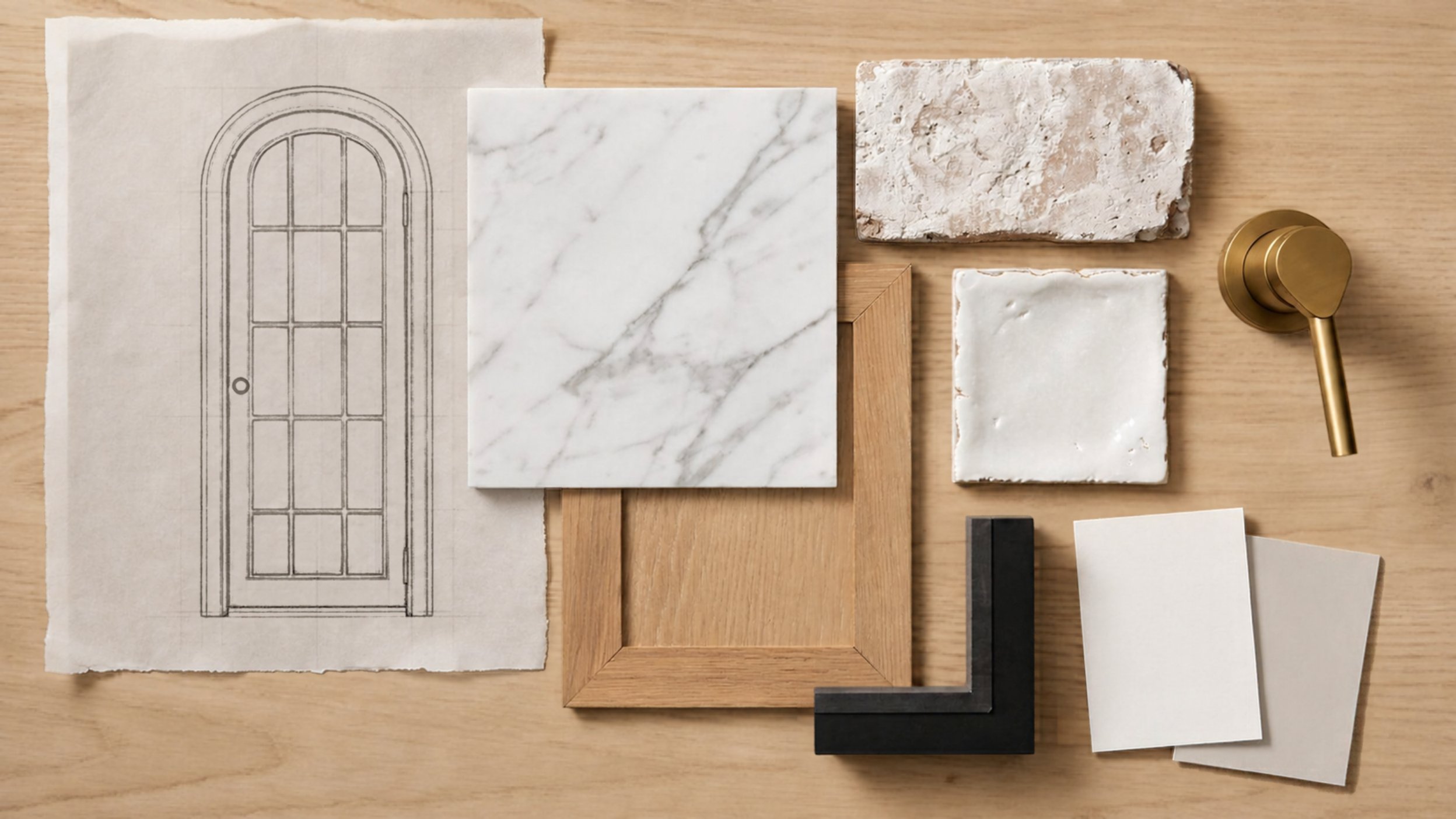
Materials carried outside. Repeating a stone color, trim profile, ceiling finish or fixture style helps inside and out read as one. It does not need to match. It needs to look like the same family.
Hardscape materials for Georgia’s climate
North Atlanta gets hot, humid summers, heavy rain and winter nights below freezing. Every material involves trade-offs.
| Material | Strengths | Watch for |
|---|---|---|
| Bluestone | Refined; suits traditional and modern houses | Darker tones get hot in full sun |
| Travertine | Relatively cool underfoot; natural around pools | Porous; needs sealing; can wear with freeze-thaw |
| Brick | Fits Georgia’s traditional architecture; easy to patch | Can grow moss in shade |
| Natural fieldstone | Informal and regional; blends into wooded lots | Uneven for dining chairs and carts |
| Pavers | Repairable unit by unit; permeable versions exist | Poor base compaction shows as settling |
| Composite decking | Low upkeep; no staining | Can run hot; feels different from wood |
| Hardwood decking | Warm, natural look | Needs regular oiling or weathers to grey |
Under every option, the base and drainage decide how long it lasts. On a sloped lot, material also affects runoff. UGA Extension lists permeable pavers among pavements that let some water soak in, which can matter when a design nears a lot’s limit on hard surfaces.
Covered porches, screened porches and pavilions
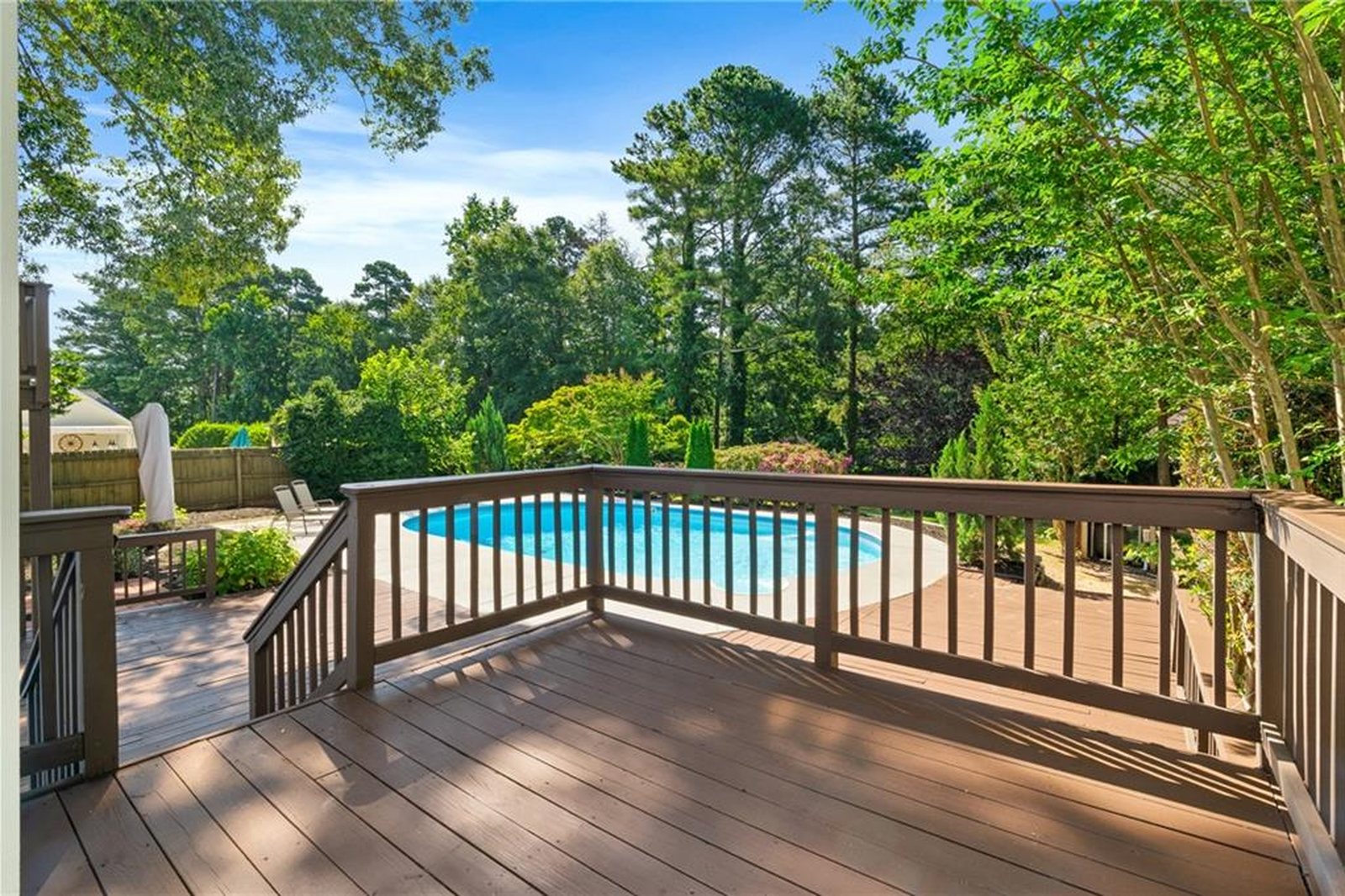
In this climate, covered space is often the most-used part of the yard. A roof gives shade in July and keeps the table dry through a summer storm.
Screening matters too. UGA entomologists describe the Asian tiger mosquito as Georgia’s most common container-breeding pest, one that bites during the day, more often in shade. That is exactly where people sit on a wooded lot.
UGA also notes this mosquito seldom travels more than 100 to 200 yards from where it hatched, so many of the mosquitoes in your yard were raised close by. Design can help:
- Gutters that drain fully, and downspouts that discharge away from low spots.
- No hollows in hardscape, planters or covers that hold water after rain.
- Screen doors that open outward with self-closing hardware, as UGA recommends.
A pavilion with a solid roof works when the house cannot take a porch gracefully, or as a destination beyond the pool. Fans and a finished ceiling make it feel like a room.
Outdoor kitchens
Plan around how you actually cook. A grill, a prep counter and a landing spot cover most households; add a sink, refrigeration or a pizza oven only if you will use them. Keep the station near the indoor kitchen and under or beside a roof. Run gas, power and water lines early, since they often sit under hardscape that is costly to open later.
Pools and spas
A pool needs the flattest, sunniest ground, which on a sloped site often means retaining walls and careful grading. Weigh afternoon sun, views from the house, privacy and the root zones of trees you want to keep. A spa near the house or porch gets far more winter use than one at the far end of the yard.
Georgia’s current state minimum codes include the 2024 International Swimming Pool and Spa Code with Georgia amendments, which sets barrier and gate requirements. Local building departments enforce them, so confirm details for your city or county before the fence design is final.
Fire features
A fireplace on a covered porch acts as a focal point and a privacy wall. A low fire pit suits a casual lounge. Gas is instant and clean; wood brings sound and smell. Keep either clear of overhanging branches and check local rules on burning and clearances.
Lighting
DarkSky International sets out five principles that suit residential work: light should be useful, targeted, low level, controlled and warm-colored. In practice:
- Path and step lights for safety, aimed down and shielded.
- Uplighting on a few chosen trees or walls, not every one.
- String or café lights over dining for a softer, social glow.
- Timers and dimmers so lights are on only when needed.
Planting for North Atlanta
Know your zone
In November 2023 the USDA updated its Plant Hardiness Zone Map, which is based on average extreme winter lows. UGA Extension in Fulton County reports that North Fulton, Cherokee and Forsyth moved from zone 7b to zone 8; Alpharetta’s 30004 zip code is now 8a. The same UGA article cautions that hard freezes still happen, so plants that are only marginally hardy may need replacing. Choosing plants comfortable in 7b gives you a margin.
Work with clay
UGA Extension describes north Georgia’s native clay as poorly drained but good at holding water and nutrients. For ornamental beds it suggests working in about 25 percent compost or soil conditioner, or about three inches tilled 10 to 12 inches deep. Native trees and shrubs typically do not need amended soil. Start with a soil test from your county Extension office.
Protect the trees you have
Mature hardwoods and pines are the most valuable plants on most lots, and construction is their biggest threat. UGA Extension in Bartow County warns that survival is affected when 20 to 30 percent of a tree’s critical root zone is damaged. In clay, three inches or more of fill can kill roots, and decline from compaction may take three to seven years to show.
UGA’s rule of thumb: protect a circle whose diameter in feet is 2.5 times the trunk diameter in inches. Fence that zone before equipment arrives, and keep patios, trenches and grade changes outside it.
Choose natives that fit
UGA’s native plant guide recommends placing shade-loving understory plants where they get partial shade, especially in the afternoon, and notes that even natives need extra water in their first year if rain is short. Natives from that guide that suit shady North Atlanta borders include oakleaf hydrangea, sweetshrub, dwarf fothergilla, Piedmont azalea and Florida anise-tree.
Privacy screening
For evergreen structure and screening, the same guide includes American holly, southern magnolia and southern wax myrtle. Layer them with mid-height shrubs and lower planting rather than one long row of a single plant; a mix is less exposed to one pest and looks more natural. A fence or garden wall gives immediate privacy while plants grow.
Drainage, irrigation and stormwater
Slope plus clay makes water the biggest technical issue in North Atlanta landscapes. More roofs, terraces and drives mean more runoff, and it has to go somewhere.
UGA Extension notes that Piedmont soils infiltrate at a moderate rate. Its rain garden guidance calls for siting them more than 10 feet from the house, with a typical depth of six to eight inches and a mix of roughly half sand, a quarter topsoil and a quarter compost. Regrading, French drains, dry creek beds and permeable paving are the other tools, best designed with the hardscape rather than after a storm exposes a problem.
For irrigation, the Georgia Water Stewardship Act allows daily landscape watering only between 4 p.m. and 10 a.m. for customers of permitted water systems. Drip lines in beds, separate zones for lawn and shade, and a rain sensor make it easier to stay within those hours and avoid drowning clay.
Low-maintenance choices
- Less lawn, more beds of shrubs and groundcovers.
- Natives and adapted plants in the right light and soil.
- Organic mulch such as pine straw or pine bark, which UGA suggests for new plantings.
- Composite decking or durable stone where upkeep matters more than patina.
- Drip irrigation on timers.
Lake homes and Lake Lanier
Lake Lanier’s shoreline is public land managed by the U.S. Army Corps of Engineers under its Shoreline Management Plan. According to the Corps, any work on public property needs a permit first. Permits last up to five years, are not transferable and grant no real estate rights. Prohibited acts include clearing trees and understory, planting non-native or ornamental vegetation, and placing unpermitted items such as benches, swings or picnic tables. The Corps estimates six to eight weeks to process a complete application.
So the designed garden, terraces and lighting usually belong on the private side of the Corps boundary, which the Lake Lanier office can help you locate.
Permits and local rules
Rules vary by city and county, but outdoor projects commonly involve:
- Impervious surface limits on how much of a lot roofs, paving and pools can cover.
- Pool barriers under the state pool code, enforced locally.
- Setbacks and buffers from property lines, streams and other water.
- Land disturbance and grading review, especially on slopes.
- Electrical and gas permits for lighting, kitchens and fire features.
- HOA design review in many neighborhoods.
Check with your building and planning department early.
How Joist and Linen plans outdoor space
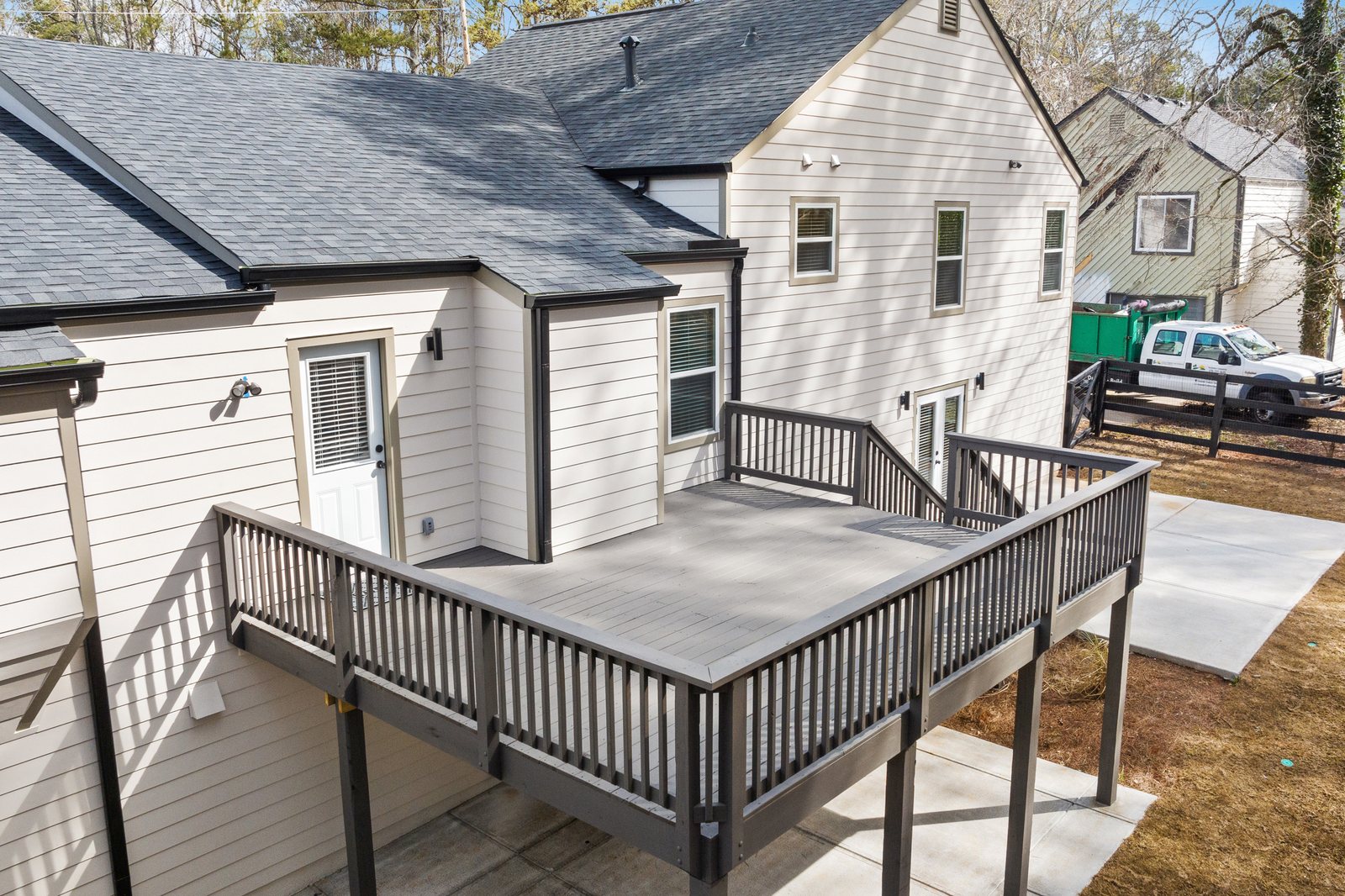
We plan outdoor rooms as part of the house, not after it. The sightlines, doors and materials that shape the kitchen or family room also shape the porch, terrace and garden beyond them.
Because Joist and Linen designs the renovation, manages the construction and furnishes the finished rooms, one person stays accountable for how inside and outside come together, from the framing to the final pillow. If you are planning work on a home in Alpharetta, Milton, Roswell, Johns Creek, Marietta, Cumming, Atlanta or a nearby lake, we are glad to walk the property with you.
Sources
- Outdoor Features and a Laundry Room Among Most Wanted Features, NAHB Eye on Housing, 2024
- Affordability Headwinds Driving Home Buyers’ Interest in Smaller, More Personalized Homes in 2025, NAHB, 2025
- Controlling Mosquitoes, UGA Department of Entomology Extension, n.d.
- Mosquito Biology and Behavior (C1155), UGA Cooperative Extension, 2026
- Planting Zone Confusion: What Are the Current Planting Zones?, UGA Extension Fulton County, 2024
- USDA Plant Hardiness Zone lookup for 30004, Garden.org (USDA ARS and Oregon State PRISM data), 2023
- Baking Up a Better Soil Makes for a Successful Garden, UGA CAES Field Report, 2018 (updated 2025)
- Construction Damage to Trees, UGA Extension Bartow County, 2024
- Native Plants for Georgia Part I: Trees, Shrubs, and Woody Vines (B987), UGA Cooperative Extension, 2024
- Stormwater Management, UGA Extension Georgia Green, 2021
- Non-drought Outdoor Water Use Schedule, Georgia Environmental Protection Division, n.d.
- Current State Minimum Codes for Construction, Georgia Department of Community Affairs, 2026
- Five Principles for Responsible Outdoor Lighting, DarkSky International, n.d.
- Lake Sidney Lanier Shoreline Management, US Army Corps of Engineers Mobile District, n.d.
- Lake Sidney Lanier Shoreline Management Permit Program, US Army Corps of Engineers Mobile District, n.d.